Another Tack: Optimism was compulsory

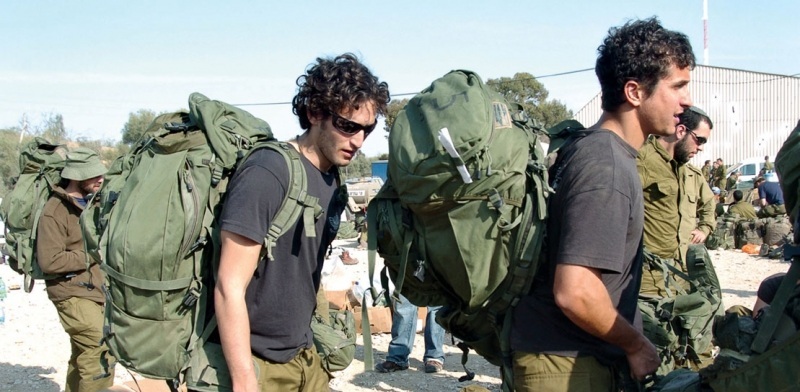
Israeli babies born this month 18 years ago are now old enough for the draft. Some are already in uniform while others soon will be. They were born under the Oslo sign. It seemed a great time to come into the world.

They took their first breaths as the Oslo accords were inaugurated with whoops of rapture. Niggling doubt was politically incorrect and accordingly drowned out with heaps of scorn and wrath in the name of goodwill and broad-minded tolerance. Optimism was compulsory.

But, looking back, was optimism vindicated? Had the Oslo dreams panned out and even partially justified the hype, there would be no more need to train any more 18-year-olds in the arts of war – especially this very symbolic batch of 1993-vintage recruits. Continue reading

Another Tack: From bakshish to Khaybar

In many ways Egypt-present isn’t like Egypt-past. In many ways nothing in Egypt has changed at all.
Herein prevails the paradox. Egypt is a bedeviling composite of the mutating and the immutable.

I described its immutability years ago, when recalling my first work assignment to Egypt. In those days peace with Israel hadn’t yet been thoroughly delegitimized among the broad lower strata of Egyptian society (as distinct from the razor-thin so-called intelligentsia).

Yet it was a frustrating (pre-Internet) time. The Jerusalem Post’s then-editors wouldn’t hear of footing the bill for long-distance telephone communications. Reporters from other Israeli papers weren’t likewise impeded. I had to travel by cab alone each night – over an hour each way – from our well-secured hotel to Cairo’s Reuters headquarters to file my copy by telex. Continue reading

Another Tack: That Beilinesque mind-set

Our homegrown self-appointed guardians of collective conscience also inevitably – by their own testimony – corner the market on all available good sense. They persistently analyze our assorted predicaments and without fail arrive at the same judgment – Israel is to blame.

Specific circumstances and incidental details notwithstanding, it’s always our moral lapse and/or misguided conceptions that make us mess up massively. We need only be more virtuous or more sagacious (obviously as per their flawless recommendations).

The other day Yossi Beilin – ex-minister, pivotal Oslo protagonist, Labor Party headliner and later Meretz hotshot – published an op-ed in Yisrael Hayom omnisciently instructing us all on where we erred vis-à-vis Turkey. And thus he sermonized: “There comes a moment when a state must weigh what’s dearer to its heart – diplomatic, military and economic ties with a very large Muslim country whose influence in the region grows, or insistence on the truth, as it perceives it, and on what it interprets as national honor.”

Beilin’s preferences are unequivocal – we should have opted for the bounty clearly accruing from chumminess with Turkey and apologized abjectly for our legitimate self-defense in the Mavi Marmara incident. Considerations of national honor, he more than implies, are irrational, if not outrightly insane. Continue reading

Another Tack: The real danger

It’s a decade since 9/11, an anniversary that must provoke uneasy thoughts everywhere – including, for instance, on US President Barack Obama’s perspectives.

But does it? Kadima headliner Tzipi Livni recently granted an interview to The Atlantic magazine in which she waxed ecstatic about Obama’s pressure on Prime Minister Binyamin Netanyahu and zealously recommended more.

It’s as if a cynical, self-willed disconnect from our realities caused Livni to forget her own tenure as foreign minister and rendered her bizarrely oblivious to Obama’s worldview.

Otherwise she’d have recalled that two years ago, when addressing Turkey’s parliament, Obama expressed profuse appreciation “for the Islamic faith, which has done so much over so many centuries to shape the world for the better, including in my own country.”

This is Obama’s recurrent and persistent theme. “We are not at war with Islam,” he has declaimed repetitively on numerous occasions. By inference, neither is Islam at war with America, or, for that matter with Israel – to say nothing of any other democracy where Muslim terrorists have set off an explosive device or two. Continue reading

Another Tack: Khartoum’s three ‘no’s’- the Ramallah version

Our media – forever plying an advocacy agenda and tendentiously promoting hyped humbug – showed no interest in focusing on Ramallah figurehead Mahmoud Abbas’s latest song and dance. Denied resonance, the story expired virtually unnoticed.

Most Israeli news-consumers were highly unlikely even to have detected any fleeting resemblance between Abbas’s three “no’s” and the three “no’s” enunciated so bombastically in Khartoum exactly 44 years and one day ago.

Representatives of all Arab League members and the PLO hobnobbed in Sudan on August 29, 1967, soon after the Six Day War. On September 1, they published their resolution, popularly dubbed “the three no’s”: “no peace, no recognition, no negotiation with Israel.”

It would serve us well to recall that this was when Israelis delusionally awaited, as Moshe Dayan phrased it, “a phone call” from Arab leaders. We sincerely convinced ourselves that given the new circumstances in the region, there’s no alternative for the Arab world but to shake off its refusal to accept Israel and to effect a lasting reconciliation. Continue reading

Another Tack: The scorpions sting – again

Left: Miri & Haim on the hood of the bus in Eilat hours before the horror. Right: Haim FurstenbergConventional wisdom contends that neither Gaza nor Cairo harbors much interest in fanning terrorist flames and disrupting the uneasy truce that has precariously prevailed since Operation Cast Lead. Egypt, an unsteady step away from uncontainable internal chaos, prodigiously presents Cairo’s caretaker military junta with other preoccupations.

Simultaneously Hamas surely doesn’t relish another punishment of the magnitude inflicted upon it in 2008.

This makes ample sense – on our wavelength. Cerebral processes in the Arab realm, however, don’t necessarily conform to our rationale. They practically never do.

Israelis shocked by last week’s roadside massacre outside Eilat and by the ensuing rocket barrages from Hamastan fall prey to excessively non-Levantine logical assumptions. They fail to understand that our concepts of levelheadedness don’t apply in neighboring latifundia. Continue reading

Another Tack: Red flags in Tel Aviv (II) –Mapai memories

So sweet is the enticement of deluxe revolution, requiring no risk or real effort, just lots of self-applied ego massages, outdoor happenings, free entertainment and nonstop media hype.

We can all feel like heroes by just coming out to hear mediocre renditions by opportunistic crooners who infuse us in high decibels with affectations of purpose and camaraderie.

Altruism isn’t part of the equation. Entitlement antics mandate no self-sacrifice. Quite the contrary.

It’s not “what I can do for my country” but “what my country can do for me.”
 While the world precariously teeters on a recessionary precipice, we indulge in anti-capitalist conniptions, incongruously powered by the profit motive.

The summer heat and humidity have finally steamed the leftovers of our collective gray matter and sent this nation into a hissy fit. Our irrationality is fueled by devil-may-care irritability. We’re seemingly ready to throw out the baby with the bathwater, to the delight of Mahmoud Ahmedinejad, Hamas, Mahmoud Abbas, et al. Boiled brains, mass neuroses, greed and trendy tantrums make us perfect patsies for political exploitation. Continue reading

Another Tack: Red flags in Tel Aviv (I) – a helpful glossary

There’s a long, dishonorable history of pro forma non-political associations that in fact were set up or propped up to serve political goals. Yet their propensities, purposes and patronage are cunningly masked in order to make their deployment more effective.

The upshot is that extremist programs are actually promoted within what are presented to public view as moderate frameworks. This wins greater support and adherence than would otherwise be the case. Even activists within these outfits are often bamboozled.

Yet no matter how clever the camouflage, there’ll invariably remain telltale clues to what really lies beneath. Intelligent citizens and news-consumers need seek out such hints and beware.

When a protest over high rents evolves into an all-encompassing clamor for “social justice,” odds are that it calculatingly conceals something so extensive, so ill-defined and hence so unattainable that non-satisfaction is a priori guaranteed. Nothing can possibly please these protest-orchestrators. All goodwill gestures will predictably fall short of their catch-all demands. Continue reading

Another Tack: Free to love Wagner

Negligible reports tucked away below the fold of forgotten inside pages oftentimes signify much more than the scant attention accorded them. So it was with news that the Israel Chamber Orchestra played Wagner in Germany at the Bayreuth Festival dedicated to his veneration. This perhaps constituted the greatest break yet of Israel’s unofficial, socially accepted taboo on public performances of Richard Wagner’s music (as distinct from listening in private).

Nonetheless, easygoing apathy greeted a story that yesteryear would have instigated riots. Classical music is anyhow the preserve of shrinking clusters of cultural aesthetes, once numerous and influential in our midst. Today, they’re judged esoteric and hardly anyone cares.

Moreover, several false premises paint Wagner-aversion as ludicrous and outdated. Wagner’s music, we’re told, shouldn’t suffer because Hitler appropriated it. The composer, after all, died half a century before the Third Reich.

Another premise is that our loathing for Wagner is insular and generation-based. Hear ICO chairwoman Erela Talmi: “The atmosphere has changed, and those people who were at the concentration camps are either weaker or no longer with us, and those who voiced their [anti-Wagner] opinions are only a few and it’s hard for them to be heard now.”

Subtext: The dead and dying survivors’ eccentricities sprang from exaggerated, no-longer-relevant emotionalism. Presumably we’re now free to love Wagner. Continue reading