Another Tack: Obama of the open mic

‘The tongue weighs practically nothing,” notes the anonymous aged adage, “but so few folks can hold it.’

Some supercilious sorts don’t even seem to try too hard – like American President Barack Obama, given to remarkable and repetitive chattiness when he’s precariously near open microphones. He is so accident-prone, in fact, that we’re forced to deduce that he personifies that most rare of hybrids – the schlemiel and schlimazel rolled into one.

Yiddish clearly distinguishes between the two categories of klutziness. The schlimazel is the one on whom soup is spilled, while the schlemiel is the one who spills it. The uncommon confluence of bad luck and clumsiness leaves one and the same character suffering embarrassment while serving as the instrument of his own embarrassment.

It’s bad enough that Obama chooses to make nice to foreign headliners and disclose to them defeatist strategies – the sort he cultivates secretly and most certainly shouldn’t want exposed to all and sundry. However, if the penchant to resort to such manipulative candor cannot be overcome, it should – one would think – be best practiced behind closed doors.

Obama’s predilection to prattle in the vicinity of plugged-in sound equipment can either denote extraordinary overconfidence and a smug presumption of invulnerability or it’s indicative of exceptional foolhardiness.

Whatever it is, Obama is serially careless. Continue reading

Another Tack: Batman and the Iron Dome

Rare are the violent clashes from which all sides emerge positively cheery. But the latest exchange of fire with Gaza was just such an atypical conflict. When the smoke cleared, both combatants came away upbeat and sure their respective enemy was taught a painful lesson.

We are near-giddy with gladness over the technological wonders of our Iron Dome anti-missile missiles, while the Gazans are hoarse with victory whoops because they managed to fire off as many rockets as they did. We effusively congratulate ourselves because no major catastrophes were wrought on our side of the border. Nevertheless, the Gazans know that had we truly won, they wouldn’t be left standing and able to spark another conflagration at another time.

What does all the sound and fury signify in real terms? Most likely that no lessons at all were taught, that no one was punished and that in all probability we once more critically misread the signs. It’s as if somewhere along the line we’ve managed to lose sight of what constitutes triumph in our peculiar immediate environment. According to Mideastern conventions, the absence of incontrovertibly humiliating vanquishment denotes a degree of victory.

This local logic mustn’t be dismissed out of hand. Continue reading

Another Tack: Learning to love the bomb

The upside to an Iranian missile onslaught on Israel is that it would facilitate new real estate projects on the crammed Coastal Plain and render obstructed sea vistas visible again. Increasingly, such morbid predictions of Tehran-initiated mega-scale land clearances in central Israel crop up in casual conversation.

Pent-up angst is vented via macabre gallows humor which presupposes that our dreadful end is inevitable, that by summertime we’d be flattened by Iranian rockets. We paint ourselves as pitiable pawns in the hands of trigger-happy leaders, as wretched victims of the unrestrained hubris and folly of demented higher-ups.

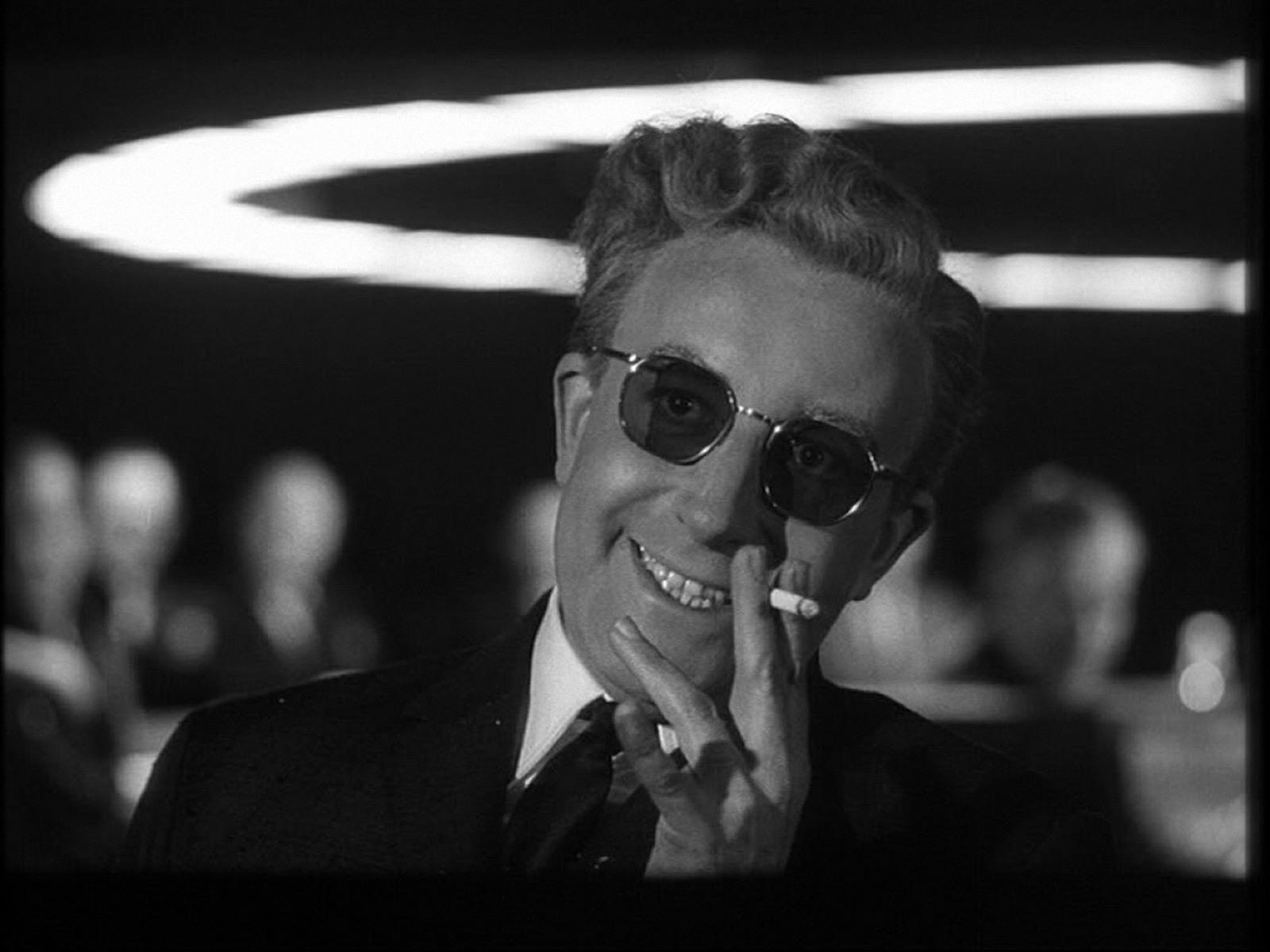
To hear some of what’s proffered by left-wing gurus and commentators, we’re now living though a terrifying real-life reenactment of Dr.Strangelove or: How I Learned to Stop Worrying and Love the Bomb. Stanley Kubrik’s 1964 black comedy spotlighted a loony general who ignites a nuclear apocalypse that a coterie of bungling politicians and frantic generals fail to stop. Continue reading

Another Tack: Marie in Morag

More than anything, Marie Colvin, who was laid to rest Monday, will be remembered for sacrificing her life for the London Sunday Times’ circulation figures (albeit pro forma in the name of intrepid reporting on the siege of Homs). Her immortality in the annals of journalism is guaranteed.

With that in mind, it’d be especially instructive for us to recall one of her eyewitness accounts which is most pertinent to our own circumstances.

It was published nearly six years ago – in April 2006, only a few months after we disengaged from Gaza.

Colvin tossed the truth about our self-bamboozlement directly in our faces. This perhaps was why that specific item generated near-zero resonance among us. Why focus on the unpleasant even if it’s the straightforward bottom line with profound implications for our possible future follow- up follies?

If there’s anything we dislike, it’s to be confronted with evidence of our own inexcusable imbecility. Continue reading

Another Tack: Prelude to murder

The word “occupation” invokes differing definitions in the Arab realm. All involve Israel but the precise connotation depends on the context.

Liberal-hearted foreigners, whose sympathy and political support is sought, are told that occupation refers to lands Israel took (obviously out of unadulterated malice) in 1967. Unless these arbitrarily usurped territories are ceded, Mother Earth will know no peace and harmony.

But Arab/Muslim listeners discern other undertones. For them any Jew’s presence, even inside Israel, amounts to sinful and insufferable occupation. Rectifying that wrong means terminating the existence here of all Jewish trespassers. Continue reading

Another Tack: The context of Mustafa’s misadventures

An Arab fable (as distinct from a potentially biased Western narrative) focuses on Effendi Mustafa’s relaxing afternoon in his idyllic orchard. Suddenly Mustafa’s pastoral peace is disrupted by a bunch of mischievous boys exuberantly chasing each other among his trees. Mustafa’s yells and threats go unheeded. He realizes he must conjure up a clever ruse to get rid of the noisy intruders.

He cloyingly summons them and whispers that apples of solid gold hang heavy off the boughs in their neighbor Ahmed’s garden. If the youngsters rush over quickly enough, Mustafa counseled, they may avail themselves of the alluring bounty. No sooner had he finished spinning his tale, than the kids disappeared in search of fabulous riches.

How sweet the lie! Continue reading

Another Tack: Lessons from the floating coffin

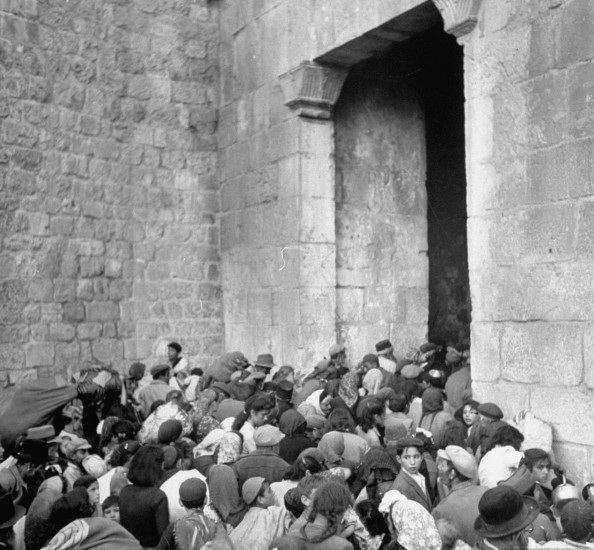
Exactly 70 years ago – on February 24, 1942 – 19-year-old David Stoliar terrifyingly clung to bobbing debris in the Black Sea. At first he heard screams in the frigid waters but the voices died down. It eventually emerged that Stoliar was the sole survivor of the Struma, an un-seaworthy vessel chuck-full of frantic Jewish refugees.

World War II was already in fever pitch. Against the enormity of the then-unfolding Holocaust, the loss at sea of 768 Jewish lives (103 of them babies and children) was at most blithely overlooked as a marginal annotation.

Moreover, although these Jews fled the Nazis, in the pedantic literal sense they weren’t executed by Third Reich henchmen.

This atrocity was the coldblooded handiwork of Great Britain (committed while it combated the Germans but remarkably without compassion for their Jewish victims), supposedly neutral Turkey (whose so-called nonalignment didn’t extend to outcast Jewish refugees), by the Arabs (who were openly and unreservedly Nazism’s avid collaborators and who pressured London into denying endangered Jews asylum in the Jewish homeland) and, finally, by the Russians (who targeted the immobilized sardine can that carried Jews to whom nobody would allow a toehold on terra firma).

The entire world seemed united in signaling Jews how utterly unwanted they were anywhere. Continue reading

Another Tack: Adib Shishakli and Shukri al-Quwatli


Forgotten is our peculiar urban folklore, yesteryear’s spontaneous fun of small Israeli kids rapidly rolling off their tongues the names of assorted Syrian tyrants. This singsong accompanied sidewalk games and was a staple of silly summertime tongue-twister contests.

Nobody then remotely believed that riots and havoc in neighboring autocracies could betoken the rise of democracy in the Arab-speaking sphere.

But for too long we’ve lost touch with our not-so-distant past, a time when recurrent “Arab Springs” were once announced with dizzying frequency. In Syria especially they followed in furious succession until, in 1970, one Hafez Assad proclaimed the longest-lasting self-styled spring and actually managed to pass on control of the abundant Damascene sunshine and blossoms to his son, Bashar.

Both Assads’ nastiness and penchant for massacres were hardly unique in their country. Syria spawned carnage and “popular uprisings” a dime a dozen. Only the durability of Assad-dynasty despotism was unusual.

Nonetheless, now – having learned to view the world through the tinted lenses of hypocrite Europe and bedazzled America – we, too, fall for the “budding democracy” babble. Continue reading

Another Tack: Sabine’s misrepresented murder

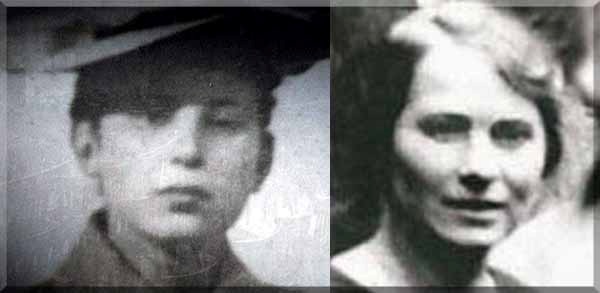
By August 11, 1942, pioneer psychoanalyst Sabine Spielrein must have ditched all illusions about German civility. On that day, she and her daughters – accomplished cellist Renate, 28, and promising violinist Eva, 18 – were, like thousands of other horrified Jews, force-marched through the central streets of the Russian city of Rostov-on-Don. They were herded toward Zmiyevskaya Balka (Snake Gully), where they were soon shot, together with many Red Army POWs.

Thus – ignominiously and brutally – ended the tempestuous 57-year life of a strong-willed woman, exceptionally independent and nonconformist for her time. In Western cultural enclaves, she’s sporadically remembered (in books, plays and films) for her affair with one of the fathers of psychoanalysis, Carl Jung.

It was a big deal back in the early years of the 20th century, when she lived in Germany, Switzerland and Austria. It was a case of opposites attracting. Jung, an unabashed anti-Semite, was both enticed by the spirited petite and repelled by her Jewishness. She was mesmerized by his Aryan looks and fantasized about a love-child in whom the best of the Jewish and Aryan would splendidly combine.

Sigmund Freud, whose great break with Jung was sparked – among other causes – by this liaison, wrote to Sabine: “You must learn to discern the difference between friends and enemies (I mean Jung).” Continue reading

Another Tack: With intent to deceive

Appearing in Ramallah on the Palestinian Authority’s Shaheed (martyr) Day, Knesset Member Ahmed Tibi proclaimed that “nobody is more admirable than the shaheed… the ultimate source of pride… the symbol of the homeland… who blazes the trail for us and paves the path to liberty with his blood.”

To preempt Israeli backlash, Tibi feigned innocence. The word shaheed, he averred, means a person “killed by the occupation.”

Yet in everyday Arabic, suicide-bombers and perpetrators of any bloodcurdling atrocity in Allah’s name are popularly dubbed shaheeds. The Palestinian Authority’s media, schools and mosques – all under professed moderate Mahmoud Abbas’s control – glorify shaheeds as models of emulation for all, from pint-sized preschoolers onward.

No Arab harbors doubt about what shaheed means. Thus Tibi winks to his Arab listeners, who understand him perfectly, while he disingenuously pretends otherwise to us. Continue reading