Show trial

The justly infamous term “show trial” was first coined back in the dark 1930s, when stage-managed pseudo-trials became a favorite ploy of Stalin’s purges in the USSR.

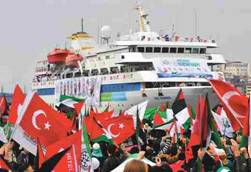
But this perversion of legal due process appears alive and thriving in Turkey, where the authorities opted to “try” four former IDF commanders, headlined by ex-Chief of Staff Gabi Ashkenazi, for the 2010 deaths of nine Turks on the Mavi Marmara, a vessel sent to Gaza in a provocative move to break Israel’s blockade of the Hamas stronghold. Continue reading

Another Tack: Shelly’s macho-man mentor

Hanna Rovina, the late-great first lady of the Israeli theater, once quipped: “people with connections don’t need protectzia” (“favoritism,” in Israeli parlance).

This is perhaps why in days bygone retiring IDF generals invariably gravitated to the Labor Party, where they had ample connections which guaranteed them a helpful leg-up to the top of the political hierarchy.

It was all mutually advantageous – symbiotic, in fact. Star officers were fast-tracked to prominence, while Labor basked in their military glory. The effect lent authority to the party’s claim to be the ultimate arbiter of what’s good for our national security. We had whom to count on and the-generals-turned-politicians couldn’t agree more. They profusely sang their own praises.

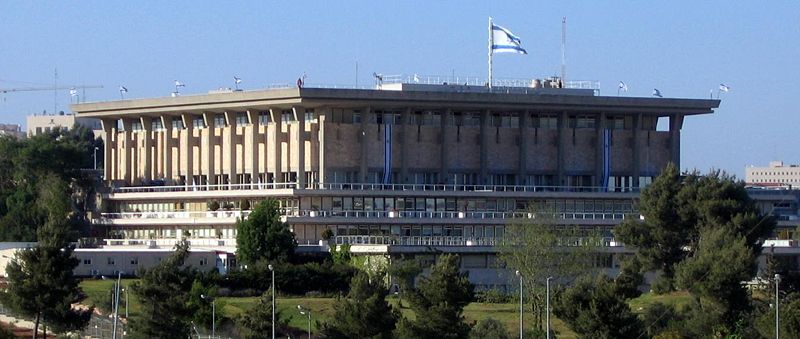
But nothing is what it used to be, particularly not in Labor. And so the heiress to David Ben-Gurion’s mantle, ex-radio presenter Shelly Yacimovich, found herself without a pivotal vote-getting ex-general figurehead. She had to have one, even if thereby she admits her own lack of experience and need to rely on the mentoring of a macho-man. Continue reading

Another Tack: How Obama saves Israel

In the last US presidential debate, incumbent Barack Obama sort of promised to save us. His exact words were: “If Israel is attacked, America will stand with Israel.” This assurance in itself – be it sincere or otherwise – should send shivers down Israeli spines.

There is, of course the question of what “stand with Israel” actually means. The phrase is too vague for comfort. But the cynical spin-potential isn’t our greatest cause for worry.

Our primary concern should be engendered by another phrase, “if Israel is attacked.” Maybe we’re ungrateful, but heck, we wouldn’t like to find ourselves in that deep existential hole where we’re bleeding, can’t help ourselves and must depend on the dubious goodwill of foreign benefactors like Obama to come – be it gallantly or reluctantly – to our rescue. Continue reading

The emir in Gaza

If it did anything, the landmark visit to Gaza by the Emir of Qatar Hamad bin Khalifa al-Thani on Tuesday exposed a slew of widespread regional fallacies.

First looms the contention of Hamas Prime Minister Ismail Haniyeh that the visit ended the political and economic blockade of Gaza. This is vitally important, coming as it does days after another ship hired by radical leftists, the Estelle, attempted to sail from Europe to Gaza to break the blockade that, as Haniyeh himself attests, does not exist.

Hamas and its global coterie of cheerleaders cannot have it both ways. There either is a blockade or there is not. Truth cannot be adjusted to whatever they find convenient at any particular juncture. Continue reading

Another Tack: When the darling departs

Israel’s agenda-driven pundits are strict mono-measurers with no other political yardstick but how any hullabaloo impacts on the Likud – or, more specifically, on its headliner Binyamin Netanyahu. They cheer whatever damages the Likud or diminishes Netanyahu.

Look at how the second coming of Shas’s Arye Deri’s was greeted. Regardless of obligatory hand-wringing about Deri’s criminal record, his comeback offered the Left an opportunity for undisguised gloating, owing to the loudly trumpeted assumption that Deri is sure to bite into the Bibi’s vote-getting potential.

The curious case of Communications, Welfare and Social Services Minister Moshe Kahlon was altogether a godsend allowing propagandists to crow that the Likud no longer represents regular folks. When Kahlon announced his time-out, for whatever reason, it became the leading news item both on air and on page one of the print media. It was as if a shining star had fallen.

This demands a serious reality check. Is Kahlon truly so central a figure, or was this deliberately skewed reporting designed to ingrain the impression that an actual watershed event had just crucially injured Netanyahu? Continue reading

Another Tack: Felicitations for banana-unbenders

The European Union was never popular in Israel and with good reason. Its officious meddling has already well exceeded the bounds of commonplace harassment and has edged ever closer to an infringement on our sovereignty, a suborning of our democracy and the undermining of our vital self-preservation interests.

So despite our government’s fawning felicitations to Brussels, many Israelis frowned on the decision to award the Nobel Peace Prize to the overbearing EU.

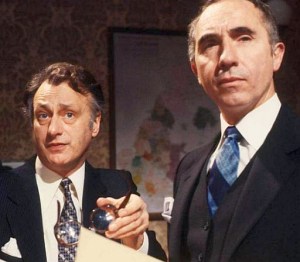
By that decision, the Nobel Peace award has finally been equated in stature and gravitas with the Napoleon Prize satirically contrived by the matchless sitcom writers who gave us the BBC’s Yes, Minister back in the 1980s.

The fictional honor, we were informed in the series’ fifth episode, is earmarked “for the statesman who’s made the biggest contribution to European unity.” That prompts the supercilious Sir Humphrey to interject: “since Napoleon, that is, if you don’t count Hitler.” (The fuehrer, by the way, was nominated in earnest for the Nobel Peace Prize in 1938, but blew his chances by launching WWII).

The Norwegian Nobel Committee, apparently out to prove that real life can rival the most side-splitting spoof, had already bestowed its peace accolades on frustrated genocide-promoter Yasser Arafat, as it did on Al Gore for scorning the ecological sins of other folks and on Barack Obama for… Well, we haven’t figured that one out yet. Continue reading

Another Tack: If only we were Turks

When it’s properly motivated, the UN can react with lightning speed. It just has to want to, as in the case of the errant mortar shells from the Syrian civil war that inadvertently overfly the border and come down with an occasional thud on the Turkish side.

No lucid pundit can envisage any stratagem that would remotely tempt embattled Damascus despot Bashar Assad to arouse Turkish ire. Assad presumably has his hands more than full at home. He is the least likely to launch deliberate aggression against his big neighbor and thereby ostracize and endanger himself even further in an already hostile world environment.

Whatever else we have to say about Assad, and there’s plenty to rightfully badmouth him for, he certainly didn’t seek confrontation with Turkey. This isn’t his doing. Continue reading

Populist fever

If Prime Minister Binyamin Netanyahu hadn’t moved up the elections to early 2013, we’d be voting in late 2013.

Sooner or later, the race must be run next year.

But the difference, in political terms, of when we go to the polls is huge. It matters cardinally to what’s best for the country rather than what’s best for any party. Here Netanyahu has undeniably opted for what’s best for the country. Continue reading

The rial’s fall

Iran’s currency is nose-diving. There can be no disputing this fact. On Tuesday, the rial hit a record low of 36,100 for one US dollar (at unofficial street-trading rates). A week earlier a dollar cost 24,000 rials. In 2011, the figure was 10,000.

This has not only imposed extreme hardship on Iran’s already hard-pressed population but has also created opportunities for all players to hype their self-serving spins.

Iran’s President Mahmoud Ahmadinejad, as expected, sought to bolster sagging morale by asserting that his country’s financial woes were all “due to psychological pressures.” Continue reading