‘Family reunion’

The crippled bus on Tel Aviv’s Shaul Hamelech RoadThere was no reason for the shocked reactions in Israel following the disclosure that the suspected perpetrator of the bus bombing in Tel Aviv last week was a Palestinian Arab who had been granted Israeli citizenship to facilitate a “family reunion.”

This category of Arab Israelis had been implicated before in terror, espionage, assorted conspiracies to undermine Israeli security and a surfeit of random crime.

Hence, any sense of surprise is misplaced. If anything, this should serve as a reminder. Too many have, for example, forgotten Shadi Tubassi, the suicide bomber who murdered 16 Israelis at a Haifa restaurant a decade ago. He too was allowed here for “family reunion.” Continue reading
Supplying Gaza

Few are aware that just as the intense rocketing of Israel’s metropolitan areas was ramped up, the Kerem Shalom crossing to the Gaza Strip was reopened early last week. Trucks laden with foodstuffs and supplies were allowed through to those who were lobbing missiles at Israeli civilians.

Undoubtedly, these consignments didn’t only serve noncombatants but were seized by the combatants and allocated as they saw fit.

Now that a cease-fire is in place, this travesty surely should prompt a comprehensive collective rethink among Israelis.

Nowhere else in the history of armed conflict was there ever a situation in which a combatant side looked after its mortal enemy’s welfare, fed it, supplied it with essentials and powered it with electricity. Continue reading

Populist fever

If Prime Minister Binyamin Netanyahu hadn’t moved up the elections to early 2013, we’d be voting in late 2013.

Sooner or later, the race must be run next year.

But the difference, in political terms, of when we go to the polls is huge. It matters cardinally to what’s best for the country rather than what’s best for any party. Here Netanyahu has undeniably opted for what’s best for the country. Continue reading

The rial’s fall

Iran’s currency is nose-diving. There can be no disputing this fact. On Tuesday, the rial hit a record low of 36,100 for one US dollar (at unofficial street-trading rates). A week earlier a dollar cost 24,000 rials. In 2011, the figure was 10,000.

This has not only imposed extreme hardship on Iran’s already hard-pressed population but has also created opportunities for all players to hype their self-serving spins.

Iran’s President Mahmoud Ahmadinejad, as expected, sought to bolster sagging morale by asserting that his country’s financial woes were all “due to psychological pressures.” Continue reading

Homemade tragedy

The country’s Arab parliamentarians managed this week to surpass even their own most strident incitement against the state that bankrolls them and guarantees their rights to subvert it. Speaking in Sakhnin at the 12th memorial to the 13 Arabs shot dead during the October 2000 riots, MKs Ahmed Tibi and Taleb a-Sanaa in effect agitated for violent vengeance, thereby ramping up already inordinately confrontational rhetoric.

This wasn’t just more of their by-now-pervasive in-your-face insolence – the sort to which we’ve already grown inured. This time there were exhortations for an operative translation by fellow Israeli-Arabs of the escalated bellicosity.

Not much could be left to the imagination when a-Sanaa railed: “If the government fails to do justice, we shall. If it fails to punish the criminals, we shall.” Continue reading

Morsi’s message

Egypt’s new leader Mohamed Morsi is proving to be a cunning communicator, at least so far as what he puts across to undiscerning Western ears. He manages to sound exceedingly moderate and reasonable, while enunciating unreasonable, indeed radical demands that must be met or else. He in effect says that “it’s my way or the highway.”

Thus, while seeming to affirm his commitment to the 33-year-old peace with Israel, Morsi at the same time piles up impediments upon which he now makes that peace contingent.

The inescapable inference is that if his conditions are not accepted, he would consider himself absolved of his obligation to keep the peace. Continue reading

Another thrill-and-spill

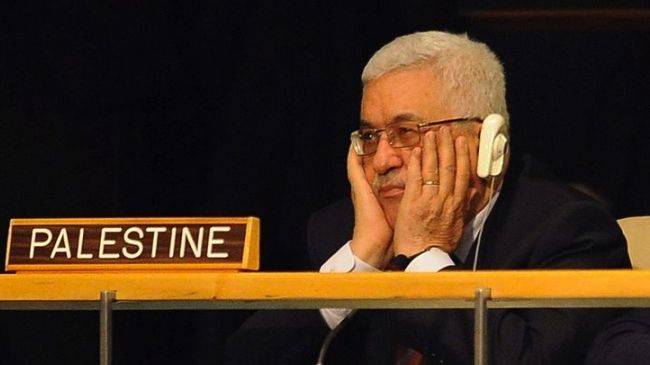
Of late, Mahmoud Abbas’s Palestinian Authority appears to be staging recurrent verbal thrills-and-spills extravaganzas. It’s almost as if, when nothing else works, generating headlines constitutes a viable alternative to actual policy and governance.

And so the latest bombshell Abbas attempted to toss was the suggestion that Ramallah might abrogate the Oslo Accords with Israel. It is difficult to fathom who Abbas supposes he may be frightening. If any side has benefitted from Oslo, it is his. After 19 years, Israel can definitely pronounce itself the outright loser of its own risky experiment. Continue reading

Rekindling Rushdie

As the world braces for more outbreaks of Muslim vengeance for perceived religious insults, there are new twists in author Salman Rushdie’s saga, which in 1989 brought fanatic Islamism’s intolerance to the Free World’s attention.

Iran’s ayatollahs seized upon Rushdie’s novel The Satanic Verses to launch a global campaign to silence freedom of expression and to have whatever is put out in the public domain effectively submit to Islamic censorship. Continue reading