Another Tack: Banana noses and freckles

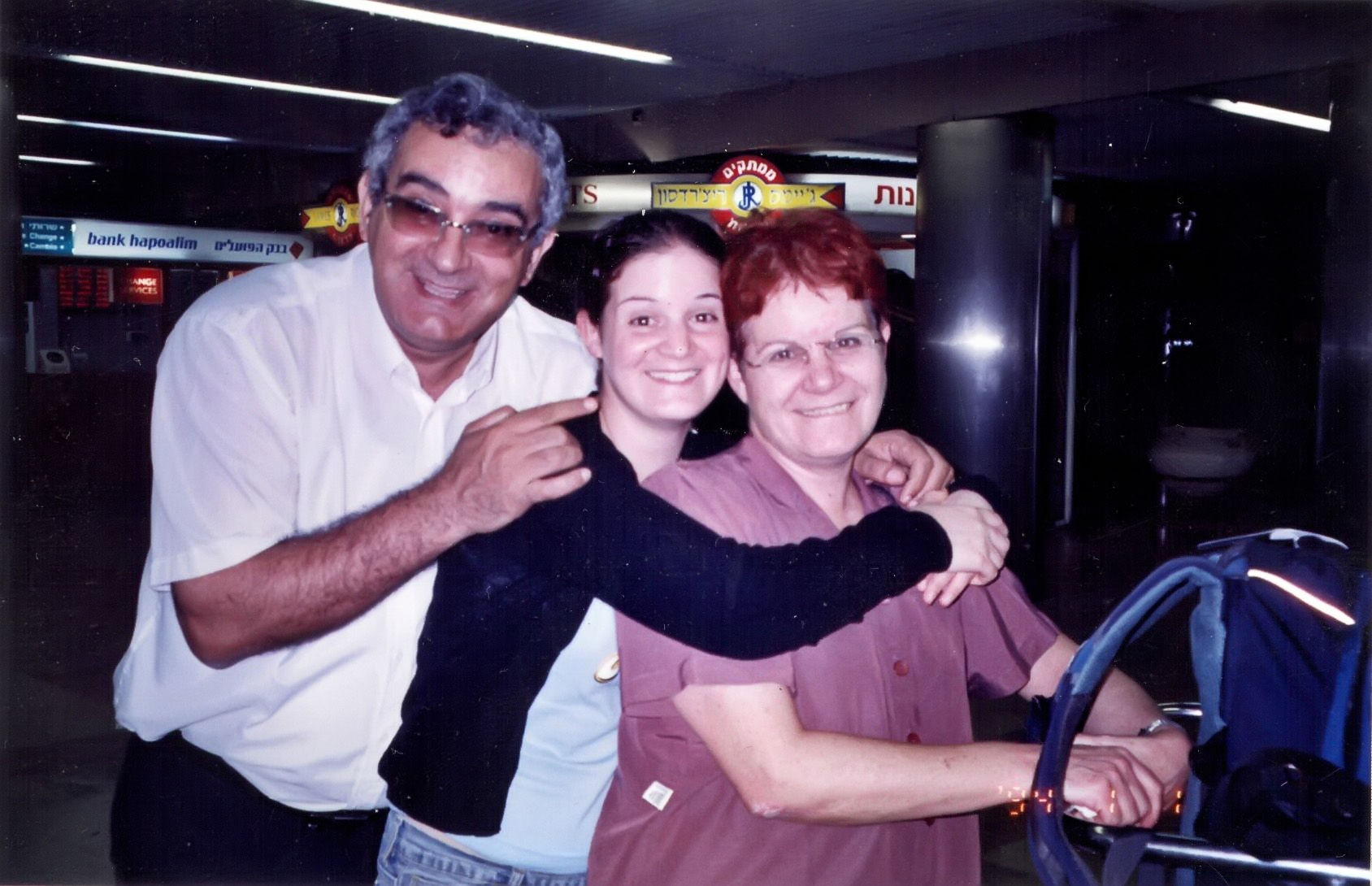
Back in junior high I had a classmate called Patty Christie, better known to her peers as Cookie. She was big, plumpish and her ruddy baby face was often conspicuously plastered with makeup, to the strident displeasure of our homeroom teacher.

One day Cookie announced assertively that “all Jews have banana noses.” Uninitiated in the irrationalism of stereotyping, I rose to the defense of our tribe: “Oh yeah? How come my nose isn’t like that?” Cookie shot back without hesitation: “Coz you’re not Jewish.”

“Yes I am,” I replied defiantly.

“No, you’re not,” she insisted. “You got freckles.”

I was stumped and all I could come up with was “Huh, what’s that got to do with anything?” Continue reading
Another Tack: Just hate wholeheartedly

Iconic Palmach songwriter and Israel Prize laureate (1983) Haim Hefer celebrated hate (only partly tongue-in-cheek) as a downright pleasurable and invigorating force. In his poem Zehubim (Yellows) he muses (my translation) that

Love and amity
Are signs of immaturity.
Mercy and all the rest
Are worthless relicts of the past.

One thing hasn’t lost its attraction:
That strange penchant for abomination…

Nothing here is smart or dumb,
Or logical, my chum –
So just hate wholeheartedly
So utterly impulsively.

Hefer’s insights into the compulsive nature of hate are remarkably borne out by the unbridled offensive of Peace Now Secretary-General Yariv Oppenheimer on Bank Leumi’s “Two Million Good Reasons” campaign. It set out to aid a broad variety of nonprofit organizations. The idea was for the public to vote online for its favorite among the 139 vying outfits – among them, alas, Im Tirtzu. Continue reading

Another tack: The poison in the well

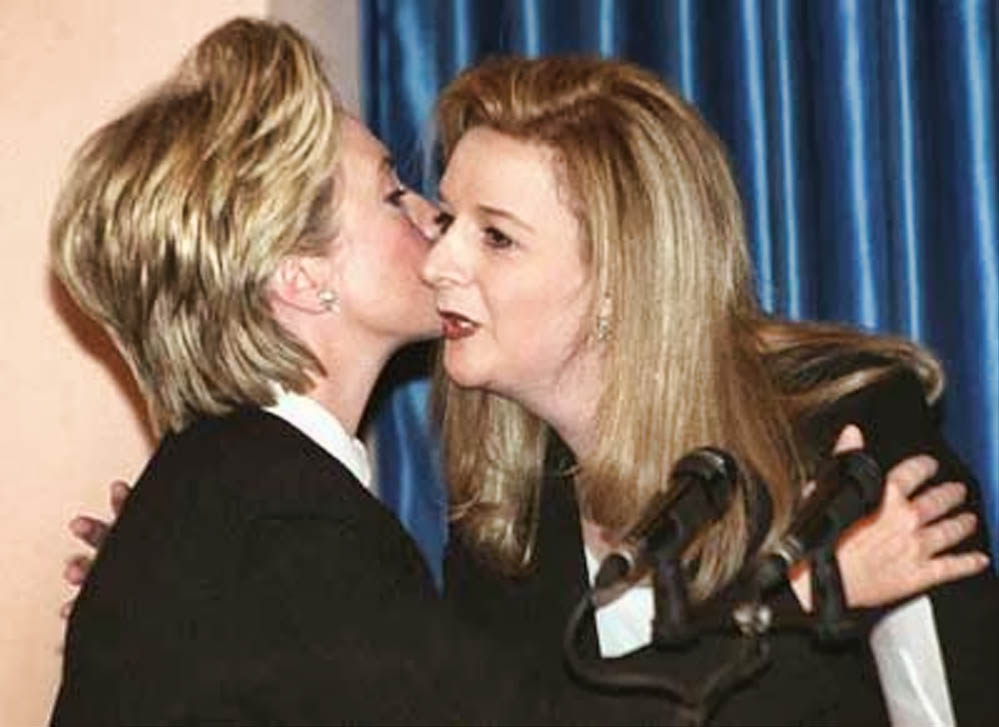
On November 11, 1999, back when she was first lady, Hillary Clinton visited Gaza. She was graciously greeted by Yasser Arafat’s wife, Suha, who spiritedly launched into a blood-libel diatribe.

None of this, incidentally, could be laid at the door of Binyamin Netanyahu’s demonic disrepute. Israel’s then-prime minister was Ehud Barak, whose electoral campaign was enthusiastically aided and abetted by Hillary’s own hubby.

But contrary to conventional wisdom, it never really matters much who’s in power in Jerusalem. Israel is always the regional bogeyman. And so, back in the good old days of post-Oslo Labor rule, America’s first lady, self-satisfied and basking in ultra-liberal sanctimony, smiled contentedly as Suha railed in indignation: “Our people have been subjected to the daily and extensive use of poisonous gas by the Israeli forces, which has led to an increase in cancer cases among women and children.” Continue reading

Another Tack: Fools rush in

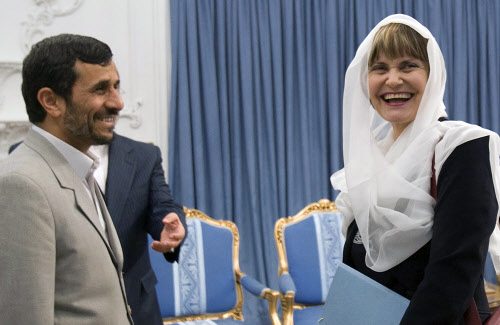
Literally just before stepping down from office, Switzerland’s Micheline Calmy-Rey has reaffirmed her country’s commitment to interfering in our affairs. As outsiders, uninitiated in the mysteries of the Swiss system, it’s not easy for us to define her role but as president of the Swiss Confederation, Calmy-Rey was head of government and, as head of the Federal Department of Foreign Affairs, she was foreign minister.

Said Calmy-Rey spoke at a recent Geneva get-together summoned, in the words of an official Swiss Foreign Ministry communiqué, “to review the achievements of the Geneva Initiative and analyze its potential in the light of current developments in the Near and Middle East.”

We may well ask “what achievements?” Continue reading

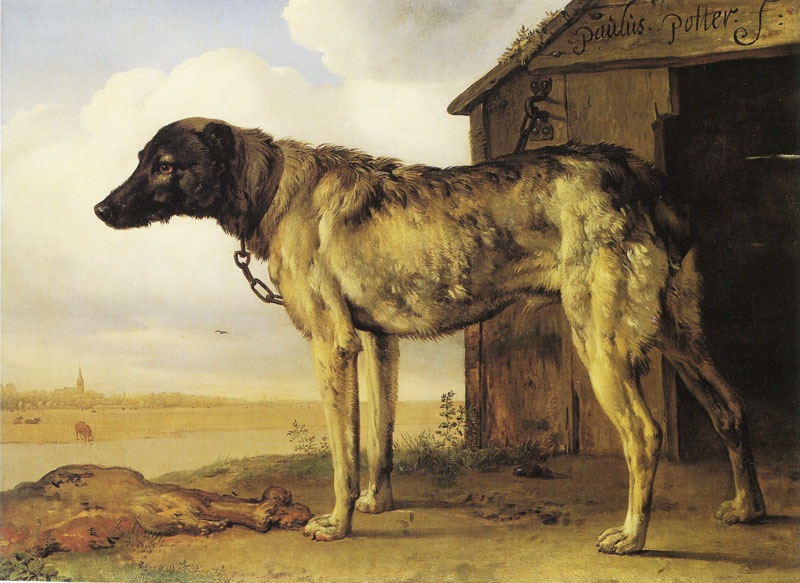
Another Tack: The selective barking of hired hounds

Hysterical headlines and none-too-coincidentally promoted causes célèbres are more often than not revealed as having been much ado about nothing. But there are different sorts of superfluous fusses.

Some are grounded in crass sensationalism, motivated by pompous publicity-hounding, ratings-boosting and irrepressible rampant shallowness. The results can be dire even without malevolent premeditation.

Inevitably, however, the loudest screamers in any given media campaign are acutely aware of the underlying sham of their pose. They fabricate the fake with forethought aplenty. They intentionally orchestrate uproars against nonexistent provocations. Their much-ado-about-nothing isn’t born of vulgarity but by deliberate design. Continue reading

Another Tack: Saccharine for the masses

On the first anniversary of the October 26, 2005, suicide-bombing in Hadera’s open-air marketplace, the city organized a memorial for the six victims (the seventh lingered and died of her injuries four years after the blast). The families expected a solemn, respectful occasion. It was anything but.

Michal Machlouf, who lost her mother Pirhiya in that atrocity, came away feeling alienated: “Municipal politicians heartily slapped each other on the back for having successfully reconstructed the market. Our tragedy became their vehicle for unabashed campaigning and expedient self-congratulation. Mom’s name was misspelled on the commemorative monument, and we felt surplus to requirements. It was obvious that the organizers couldn’t wait for the bereaved relatives to go away, because we were killjoys. We focused on the blood, while they had very nimbly moved on.”

The same sense of alienation resurfaced during the exhilaration sparked by Gilad Schalit’s release: “I’m pleased he’s back, but this outburst of euphoric festivity is so out of place, so unseemly and so unfeeling. Again we, families of terror victims, were made to feel like killjoys, like burdens who remind the celebrants of horrors-that-were and of horrors-to-come. Despite obligatory lip service, nobody wanted to remember the past or think about the future.” Continue reading

Another Tack: A sacrifice in vain?

The electoral race I covered in 1981 was the most contentious I remember. It followed the 1977 upheaval in which a non-Labor government for the first time became a plausible option. Behaving as if it were robbed of its rightful legacy, Labor aimed to correct the voters’ “error.” The end justified any and all means.

And so one evening, Yossi Sarid, who was Labor’s campaign spokesman, charged that the Likud had planted a suitcase packed with explosives outside Labor’s campaign headquarters at Tel Aviv’s Deborah Hotel. Automatically I phoned the police to inquire and was informed in no uncertain terms that an innocent tourist had inadvertently forgotten his bag at the entrance to a travel agency next door to the Deborah.

What did this have to do with a bomb? Nothing. What did this have to do with Labor? Nothing. What did this have to do with the Likud? Nothing.

Nevertheless, instead of praise for journalistic due diligence, I was subjected to the most vituperative chewing-out of my career. My bosses severely rebuked me for not trusting Sarid, for checking up and, most of all, for including the police version in my story. I was accused of no less than deliberate sabotage and asked in exasperation why I just won’t write what I’m told. In other words, I was taken to task for not toeing the party line.

This 30-year-old reminiscence remains pertinent. Continue reading

Another Tack: Yesteryear’s peculiar predictions

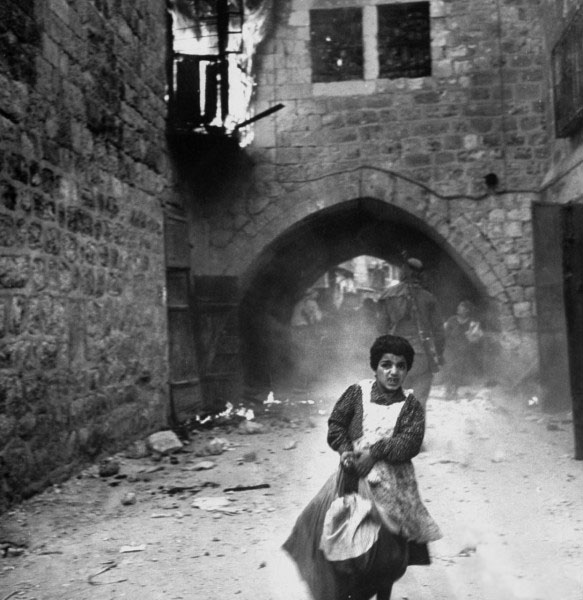
Seven-year-old Rachel Levy flees Arab occupiers in the old city of Jerusalem as her home goes up in flames.

Back in 2003 I warned in several columns and editorials that by acquiescing (for seemingly pragmatic reasons) to the delegitimization of settlements we also delegitimize our standing in Jerusalem.

“For much of the world,” I noted in an editorial for Jerusalem Day 2003, “many sections of Jerusalem are settlements – no less than Ariel or Ofra. The neighborhood of Gilo, home to more than 45,000 Jerusalemites, is routinely described abroad as ‘the Gilo settlement.’ This can impact on the continued development of many city quarters. It’s not inconceivable that the Arabs will decry any development as an infringement of strictures set in the ‘Roadmap to Peace’ while the International Quartet, slated to oversee the process, may well agree.”

At the time, I recall, the reaction was that I had “exaggerated wildly” and “stretched things out of all proportion” to make a point that was in itself quite outlandish, if not outright scaremongering. No way would our claim to Gilo ever be compromised and no way would any friendly force ever dare insist we curtail construction in so quintessentially an Israeli neighborhood. Continue reading

Another Tack: The nudnik’s oft-kibitzed refrain

Indubitably the worst kind of nudnik is a kibitzer and the worst kibitzer is the incorrigible chronic sort who just won’t let go, who is so full of himself that he utterly fails to realize what a tiresome, preposterous broken record he has become.

Bill Clinton, US ex-president and darling of all too many of his country’s inveterate Jewish liberals, doubtlessly knows that the Yiddish- derived “nudnik” denotes a nag, a pest and an all-around nuisance. At about the same time as “nudnik” became entrenched in American colloquialism, the Yiddish verb “kibitz” likewise entered the lexicon and its current dictionary definition is “to intrusively offer unwanted, meddlesome advice to others.”

Nudnik Clinton kibitzes with habitual relish, as if his assertions are valid and as if his judgmental pronouncements still count.

No matter how hard we try to consign him to the hindmost recesses of our memory, he keeps popping up with another exasperating rerun of the irksome old routine. Continue reading