Another Tack: Every man for himself

It’s official. A brand new Three Stooges remake is well under way. The sequel stooges have just banded together in a mutually advantageous alliance to fortify the governing coalition of the Jewish state – the ultimate setting to best suit their zany misadventures. For one thing, it’s quite compatible with the ethnicity of the original trio – brothers Moe and Curly (born Horwitz) and Larry who was a Feinberg.

But more important is the fact that there’s nowhere like Israel’s madcap political arena to accentuate the knucklehead anarchic antics of the jerks-of-all-trades (as yesteryear’s screwballs dubbed themselves). With them around there’s never a dull moment. They keep unsettling all and sundry, themselves foremost.

Stepping into Moe’s shoes is Binyamin Netanyahu even though he doesn’t sport a soup bowl haircut and even if he hasn’t exactly been poking at politicos’ eyes, whacking sidekicks with skillets and crunching the noses of cronies with neurotic, hyperactive zest.

But though deficient in Moe’s bully brass, Bibi is nonetheless the uncontested leader of the new threesome and their belated bond has only confirmed and boosted his primacy like never before. For better or worse, Bibi is recognized both near and far as the (for now) indisputable boss. He looks in charge, at the top of his game and unbeatable. But could he be in for nasty surprises?

Tied to him by a symbiotic fraternal attachment is Ehud Barak, playing the petulant, unpredictable and smugly self-satisfied Curly. It doesn’t matter that Barak doesn’t shave his head. He commands plenty of other attributes to qualify him for the role of the rotund buffoon, not least his pretentious parading as a key player in seeming oblivion of the fact that he has entirely lost his political power base. That in itself makes Barak as obviously unmindful of his ridiculousness as the originator of the trademark chuckle, underscored by the inevitable: “Nyuk, nyuk.” Continue reading
Another Tack: Dishonest and disgusting

Back in 1942, George Orwell pointed out matter-of-factly that “so-called peace propaganda is just as dishonest and intellectually disgusting as war propaganda. Like war propaganda it concentrates on putting forward a ‘case,’ obscuring the opponent’s point of view and avoiding awkward questions. The line normally followed is ‘those who fight Fascism become Fascist themselves.’”

Just substitute “terrorist” for the “Fascist” or “Nazi” in Orwell’s text.

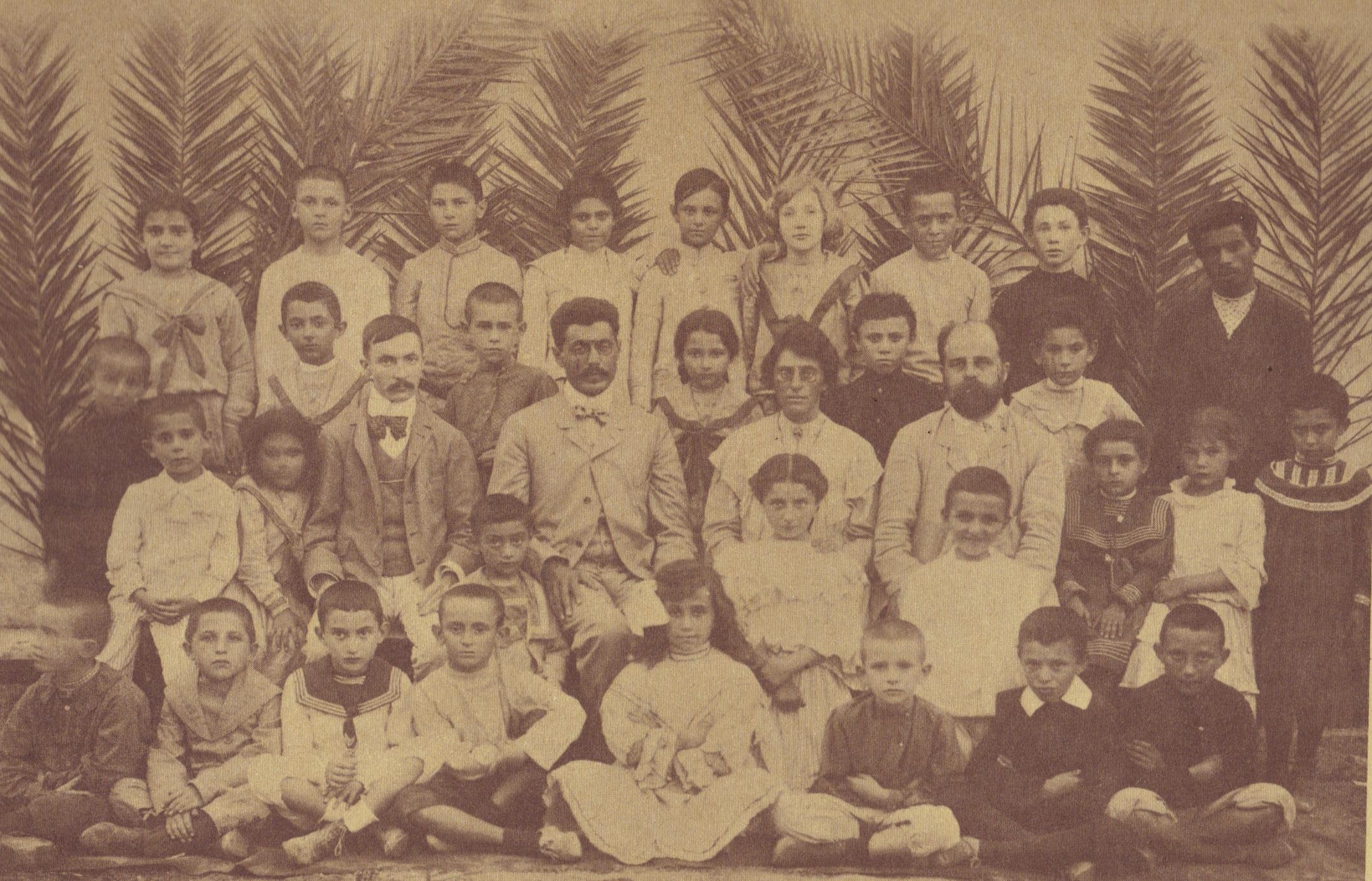
We have no way of telling whether said text was perused by Zeev Degani, current principal of Gymnasia Herzliya (the Herzliya Hebrew Gymnasium, or in its Hebrew moniker, HaGymnasia HaIvrit Herzliya). If he didn’t read this particular Orwell essay in the Partisan Review, Degani should.

Peace-propagandists, Orwell noted therein, “evade quite obvious objections” with “propaganda-tricks” which include “pooh-poohing the actual record of Fascism,” while “systematically exaggerating” alleged “Fascizing processes” within Allied ranks.

Orwell was intrigued by the “psychological processes by which pacifists who started out with an alleged horror of violence end up with a marked tendency to be fascinated by the success and power of Nazism.”

“Even those who don’t,” he wrote, “imagine that one can somehow ‘overcome’ the German Army by lying on one’s back” and they shun “discussion of what the world would actually be like if the Axis dominated it.”

Sound familiar? It should. Continue reading

Another Tack: The only thing worse

We can only speculate about whether Meir Dagan, ex-chief of Mossad (counterpart to America’s CIA), and Yuval Diskin, ex-chief of Shin Bet (counterpart to America’s FBI), are at all conversant with Oscar Wilde’s wit. Unfortunately, we’ve no way to evaluate their erudition. But on the off chance that they’re better- read than the average honcho, we might ponder whether they subscribe to Wilde’s insight that “the only thing worse than being talked about is not being talked about.”

Wilde’s dictum might go a long way to accounting for Dagan’s and Diskin’s otherwise inscrutable gabbiness, which might be no more than the product of an apparently uncontrollable urge to generate headlines. This may be in keeping with a local penchant alluded to by the colloquial Hebrew catchphrase for volubility: larutz lesaper lakhevreh. It roughly translates to “run and tell your friends.”

But that may be no more than an intricate ruse they want us to fall for. Their hypothetical nothing-is-what-it-seems hoax could be in keeping with the Hebrew semi-slang idiom hafuch al hafuch – literally “opposite on opposite”– i.e. not what you expect, the opposite of what you assume, creating an impression that’s the opposite of what immediately looks likely.

Both the above pearls of our insular culture may contain some relevance to putting Dagan’s and Diskin’s spasms of loquaciousness into some semblance of context. Continue reading

Another Tack: The first day

‘It is with great joy that I hereby close the Mandatory Police record book,” wrote an anonymous duty officer at Tel Aviv’s central precinct precisely as David Ben-Gurion recited the renascent Jewish state’s Declaration of Independence.

Just below that spontaneous hand-inscribed historic annotation, appears the first criminal entry ever in sovereign Israel’s annals. It documents the capture of a thief. He stole a book, perchance pointing to preferences peculiar to the People of the Book.

Several hours later, the first ship docked in the new state. It began its journey furtively five days earlier in Marseilles when Israel was still under British rule. Its 300 young passengers were outfitted with fake IDs, forged at the Hagana “laboratory” in France.

But the Teti would claim special distinction – it became simultaneously the last “illegal” aliya boat and the first legal one. The counterfeit visas proved superfluous. The vessel proudly hoisted the Israeli flag as the new day dawned. Because it was the Sabbath, the newcomers were issued their new country’s entry permits only at sundown.

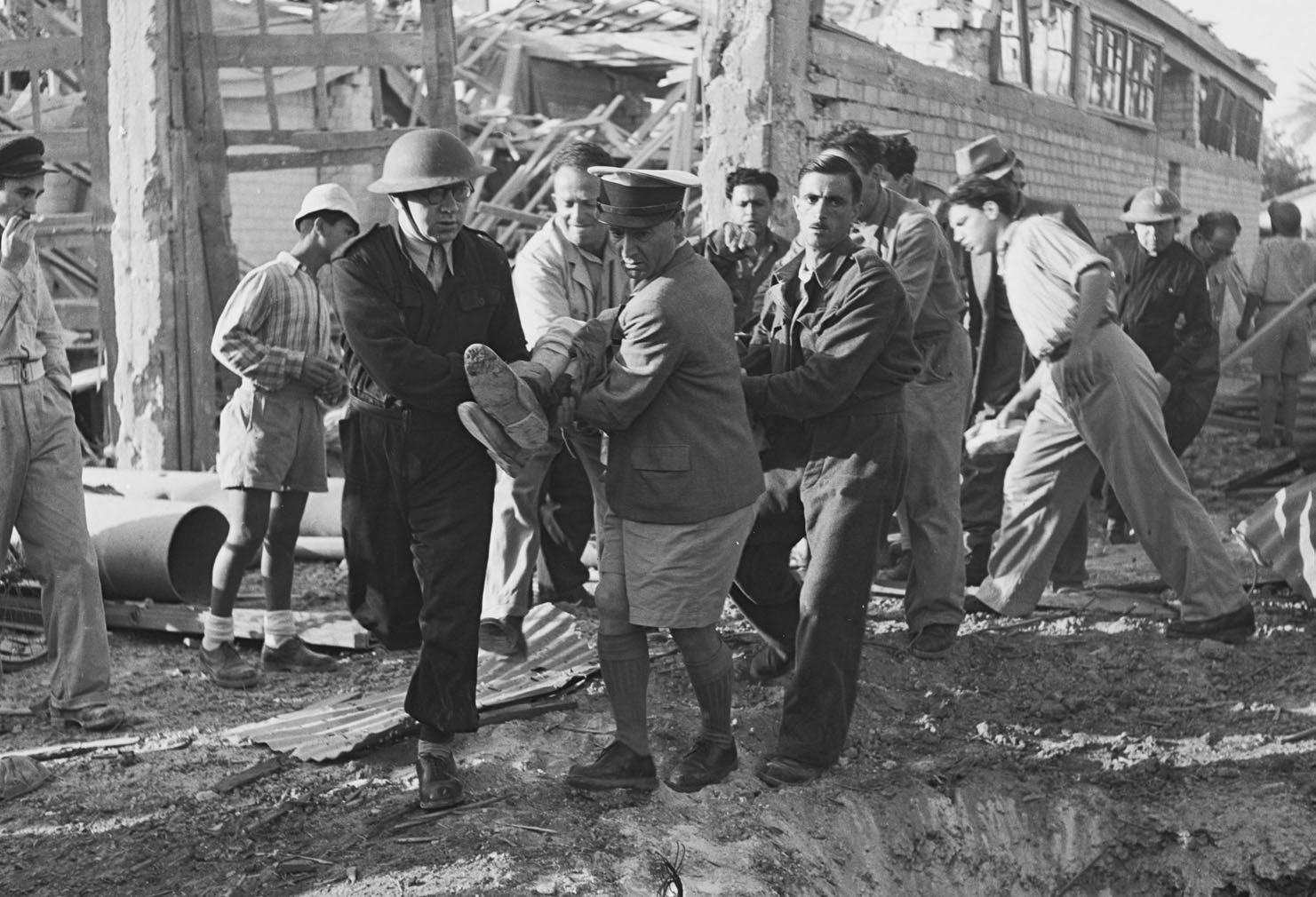
With such seemingly ordinary bureaucratic yet emotionally charged tasks, the Jewish state adeptly began the business of self-determination. In time that would be presented to world opinion as inherently sinful. By its very brazen determination to be born, it would be asserted, Israel had displaced the Palestinians, condemning them to miserable refugee subsistence. Continue reading

Another Tack: What’s that about daughters?

Can the world offer a sympathetic hearing to a group that claims divine rights to annihilate an entire nation? Apparently so.

Hamas is increasingly indulged by self-acclaimed forward-thinkers who might not relish being reminded that the Hamas Charter’s first section opens with the blunt assertion that “Israel will rise and will remain erect until Islam eliminates it as it had eliminated its predecessors.”

And lest anyone pooh-pooh this, Hamas anchors its Jew-revulsion in the Koran: “Ignominy shall be their [the Jews’] portion wheresoever they are found…. They have incurred anger from their Lord, and wretchedness is laid upon them…. They disbelieved the revelations of Allah, and slew the Prophets wrongfully… They were rebellious and transgressed.” (Surat Al-Imran III, verses 109-111)

This is no trifling lip-service which Western postmodernists so blithely belittle. Dissidence is deemed as heresy in Muslim dominions and heresy exacts pitiless retribution, as the Hamas Charter indeed warns: “Whoever denigrates the Hamas movement’s worth, or avoids supporting it, or is so blind as to dismiss its role, is challenging Fate itself. Whoever closes his eyes from seeing the facts, whether intentionally or not, will wake up to find himself overtaken by events, and will find no excuses to justify his position.”

Hamas isn’t about amicable accommodation. It “strives to raise the banner of Allah over every inch of Palestine.” Continue reading

Another Tack: The German robbed Cossack

This week in 1903 Shalom Aleichem, the giant of Yiddish literature, wrote a letter to Leo Tolstoy, the giant of Russian literature. It was shortly after the gruesome Kishinev pogrom. Shalom Aleichem planned to publish a modest compilation about the atrocity, to which he asked Tolstoy to contribute a short message to “Russia’s millions of distraught and disoriented Jews, who more than anything need a word of comfort.” Tolstoy never so much as bothered to reply.

The famed novelist, feted as the conscience of Russia, received dozens such letters urging him to speak out against the slaughters – then a seminal trauma in Jewish annals. The Holocaust was decades away. Nobody 109 years ago could imagine anything more bloodcurdling than the horrors of Kishinev.

But not everyone was moved – not even a renowned humanitarian like Tolstoy.
Not only did he not speak out, but he resented the entreaties.

He replied to one Jewish correspondent only, Emanuel Grigorievich Linietzky, to whom he caustically complained about being pestered. Tolstoy then blamed the Czar’s government, absolving the masses who bashed the skulls of babies, gouged children’s eyes, raped their mothers and sisters, eviscerated them, beheaded men and boys, quartered and mutilated them and looted all they could carry.

We hear much the same throughout Europe at each memorial to the Holocaust. Continue reading

Another Tack: Obama of the open mic

‘The tongue weighs practically nothing,” notes the anonymous aged adage, “but so few folks can hold it.’

Some supercilious sorts don’t even seem to try too hard – like American President Barack Obama, given to remarkable and repetitive chattiness when he’s precariously near open microphones. He is so accident-prone, in fact, that we’re forced to deduce that he personifies that most rare of hybrids – the schlemiel and schlimazel rolled into one.

Yiddish clearly distinguishes between the two categories of klutziness. The schlimazel is the one on whom soup is spilled, while the schlemiel is the one who spills it. The uncommon confluence of bad luck and clumsiness leaves one and the same character suffering embarrassment while serving as the instrument of his own embarrassment.

It’s bad enough that Obama chooses to make nice to foreign headliners and disclose to them defeatist strategies – the sort he cultivates secretly and most certainly shouldn’t want exposed to all and sundry. However, if the penchant to resort to such manipulative candor cannot be overcome, it should – one would think – be best practiced behind closed doors.

Obama’s predilection to prattle in the vicinity of plugged-in sound equipment can either denote extraordinary overconfidence and a smug presumption of invulnerability or it’s indicative of exceptional foolhardiness.

Whatever it is, Obama is serially careless. Continue reading

Another Tack: Batman and the Iron Dome

Rare are the violent clashes from which all sides emerge positively cheery. But the latest exchange of fire with Gaza was just such an atypical conflict. When the smoke cleared, both combatants came away upbeat and sure their respective enemy was taught a painful lesson.

We are near-giddy with gladness over the technological wonders of our Iron Dome anti-missile missiles, while the Gazans are hoarse with victory whoops because they managed to fire off as many rockets as they did. We effusively congratulate ourselves because no major catastrophes were wrought on our side of the border. Nevertheless, the Gazans know that had we truly won, they wouldn’t be left standing and able to spark another conflagration at another time.

What does all the sound and fury signify in real terms? Most likely that no lessons at all were taught, that no one was punished and that in all probability we once more critically misread the signs. It’s as if somewhere along the line we’ve managed to lose sight of what constitutes triumph in our peculiar immediate environment. According to Mideastern conventions, the absence of incontrovertibly humiliating vanquishment denotes a degree of victory.

This local logic mustn’t be dismissed out of hand. Continue reading

Another Tack: Learning to love the bomb

The upside to an Iranian missile onslaught on Israel is that it would facilitate new real estate projects on the crammed Coastal Plain and render obstructed sea vistas visible again. Increasingly, such morbid predictions of Tehran-initiated mega-scale land clearances in central Israel crop up in casual conversation.

Pent-up angst is vented via macabre gallows humor which presupposes that our dreadful end is inevitable, that by summertime we’d be flattened by Iranian rockets. We paint ourselves as pitiable pawns in the hands of trigger-happy leaders, as wretched victims of the unrestrained hubris and folly of demented higher-ups.

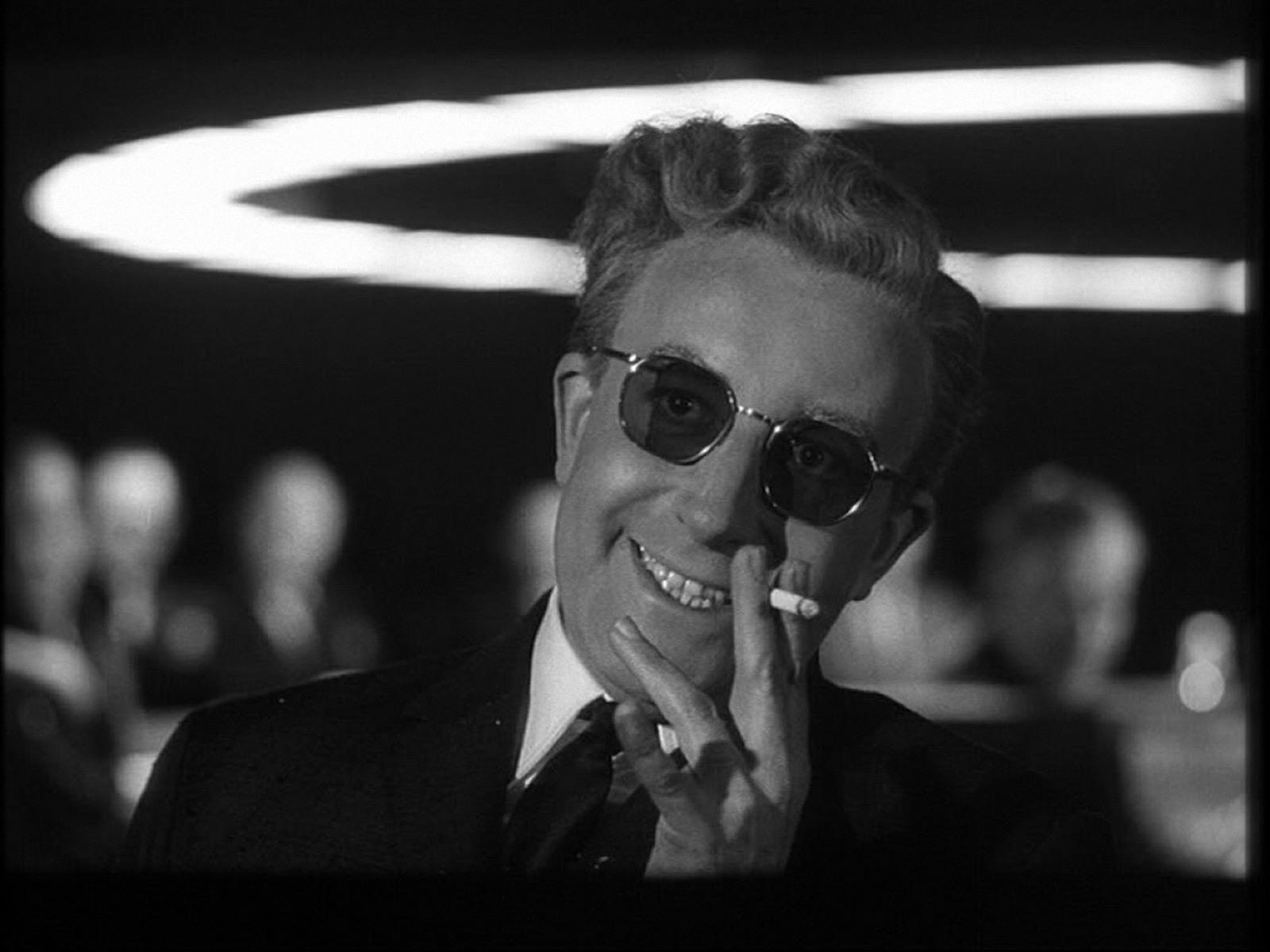
To hear some of what’s proffered by left-wing gurus and commentators, we’re now living though a terrifying real-life reenactment of Dr.Strangelove or: How I Learned to Stop Worrying and Love the Bomb. Stanley Kubrik’s 1964 black comedy spotlighted a loony general who ignites a nuclear apocalypse that a coterie of bungling politicians and frantic generals fail to stop. Continue reading

Another Tack: Marie in Morag

More than anything, Marie Colvin, who was laid to rest Monday, will be remembered for sacrificing her life for the London Sunday Times’ circulation figures (albeit pro forma in the name of intrepid reporting on the siege of Homs). Her immortality in the annals of journalism is guaranteed.

With that in mind, it’d be especially instructive for us to recall one of her eyewitness accounts which is most pertinent to our own circumstances.

It was published nearly six years ago – in April 2006, only a few months after we disengaged from Gaza.

Colvin tossed the truth about our self-bamboozlement directly in our faces. This perhaps was why that specific item generated near-zero resonance among us. Why focus on the unpleasant even if it’s the straightforward bottom line with profound implications for our possible future follow- up follies?

If there’s anything we dislike, it’s to be confronted with evidence of our own inexcusable imbecility. Continue reading